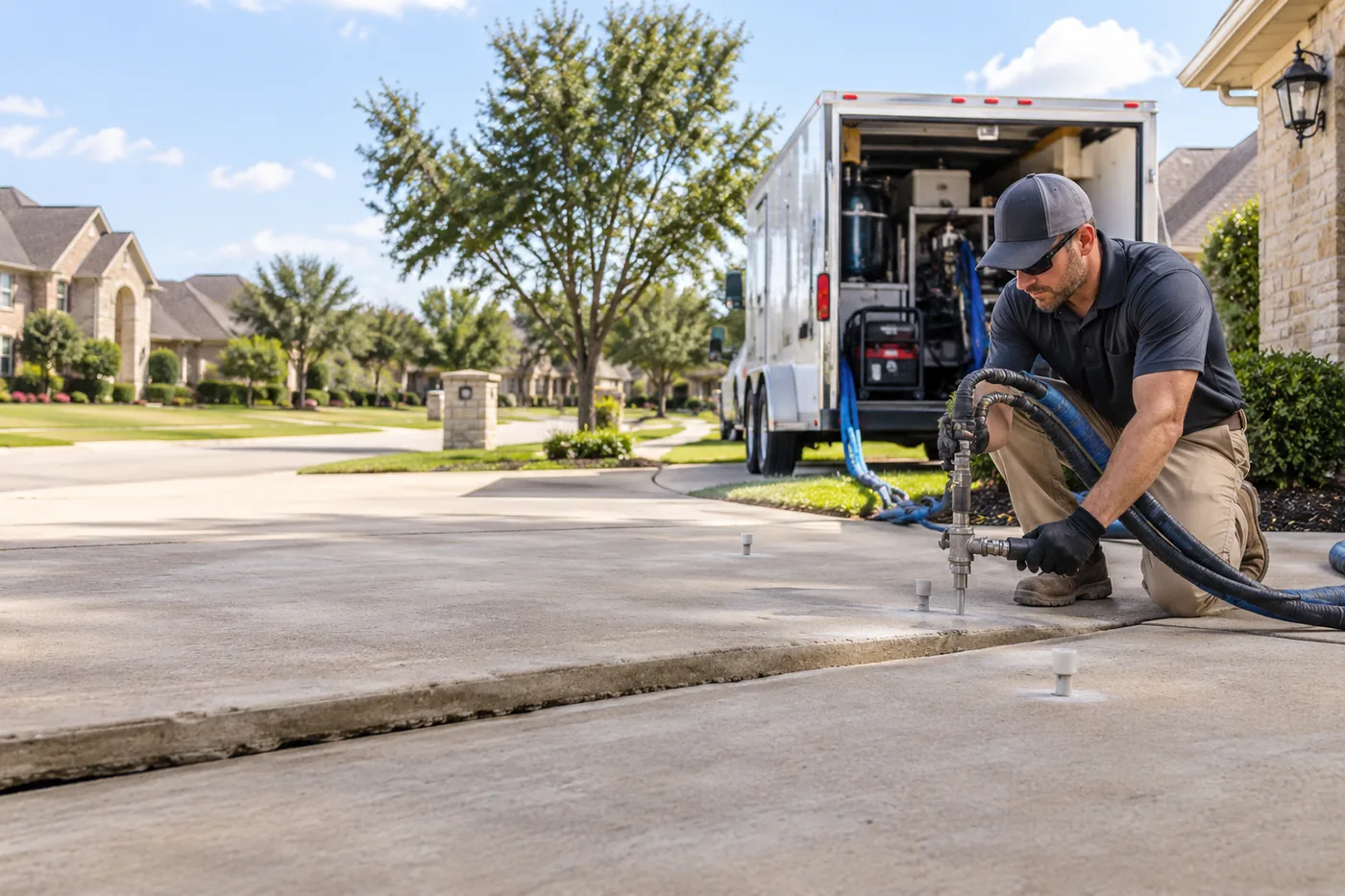
What the word polyjacking means
Polyjacking combines “polyurethane” and “jacking” (lifting). You may also see it called poly foam lifting, polyurethane concrete raising, or foam slab jacking. Whatever the name, the process is the same: a two-part polyurethane material is injected as a liquid, then expands into a rigid foam that supports and lifts the concrete.
For a closer look at the method itself, see our foam concrete leveling page — this page focuses on what Houston property owners searching for polyjacking need to know.
How the polyjacking process works
After an evaluation of the slab and the cause of settlement, the crew drills small injection holes — much smaller than those used for mudjacking — through the concrete at planned points.
Polyurethane material is injected beneath the slab, where it expands and fills voids. The technician monitors the slab’s movement in real time and injects in stages until the practical target elevation is reached. Because the foam is lightweight and expansive, it can fill space without adding meaningful weight to soft Houston soils.
The holes are then patched and the surface cleaned. The foam cures quickly, so the area can typically be used again much sooner than with cement-based methods.
Why Houston property owners ask for polyjacking
Small injection holes mean less visible patching on driveways and patios. The lightweight material is a good match for the soft, expansive clay common across Greater Houston, where adding heavy slurry on top of weak soil is a concern.
Fast curing is another draw: there is no long wait before the concrete can be used again. The cured foam is water-resistant, so it does not wash out, and it bonds to the soil and slab to help stabilize the area.
Where polyjacking is used
Driveways, sidewalks, walkways, patios, pool decks, garage floors, and stoops are the most common residential applications. It is also used on commercial slabs, warehouse floors, and roadways where downtime needs to be short. The slab still needs to be intact enough to lift as a unit — concrete that is crumbling or broken apart may need replacement instead.
Polyjacking vs. mudjacking
The main alternative is mudjacking, which pumps a heavier cement slurry through larger holes. Mudjacking often costs less; polyjacking offers smaller holes, lighter material, and faster cure. Soil conditions, slab size, budget, and access all factor into the choice. See our side-by-side comparison for the full breakdown.
Polyjacking cost factors in Houston
Pricing depends on the number of slabs, the amount of settlement, void size, access, and the number of injection points. Foam material generally costs more than cement slurry, so polyjacking can run higher than mudjacking on comparable projects — though the smaller holes and faster turnaround offset that for many property owners.
See our concrete leveling cost guide for what drives pricing, or request a free quote for your project.
What to expect on project day
Most residential polyjacking work is scheduled as a single visit. The crew protects nearby landscaping, drills the injection pattern, and lifts the slab in stages while checking elevation. When the target height is reached, holes are patched, the area is cleaned, and the concrete can usually be used again the same day. A provider will confirm the specifics for your slab during the quote.
If you are comparing bids, ask each provider the same questions: how many injection points they plan, what elevation they are targeting, how they handle drainage they notice, and what the warranty covers. Consistent answers make the quotes genuinely comparable.
Polyjacking for pool decks and patios
Pool decks are one of the most common polyjacking applications in Houston. A settled pool deck does more than look bad — it can direct water toward the pool or the house foundation instead of away from it. Because the injection holes are small, polyjacking can correct the slope without tearing up the deck surface or the surrounding landscaping.
Patios and porches benefit the same way. These are finished living spaces where appearance matters, and the subtle patching of foam injection keeps them looking clean. When a patio has tilted toward the house, restoring the slope away from the foundation is as much about water management as it is about looks.
When polyjacking may not be the answer
Foam lifting cannot fix concrete that has deteriorated beyond lifting, and it does not solve active drainage or erosion problems on its own. If water is still moving soil from under the slab, that cause needs attention too. A provider can tell you during the evaluation whether lifting or replacement makes more sense.
Get a polyjacking quote in Houston
Call (832) 662-7711 or request a free quote. Describe the settled concrete and include your ZIP code — photos of the slab and uneven joints make the first review more useful.