When concrete leveling makes sense
Leveling is usually worth evaluating when the main problem is settlement rather than severe deterioration. A slab that has dropped an inch or two, holds water, creates a trip point, or no longer lines up with an adjoining surface may be a candidate. The provider should also look at cracks, drainage, soil conditions, voids, and whether the slab can be moved safely.
Concrete leveling vs. replacement
Replacement removes the old slab and pours new concrete. Leveling works with the existing slab. That can mean less demolition and a smaller repair footprint on qualifying projects. Replacement may still be the better option when the slab is badly fractured, deteriorated, undersized, or needs a complete redesign.
Houston concrete leveling methods
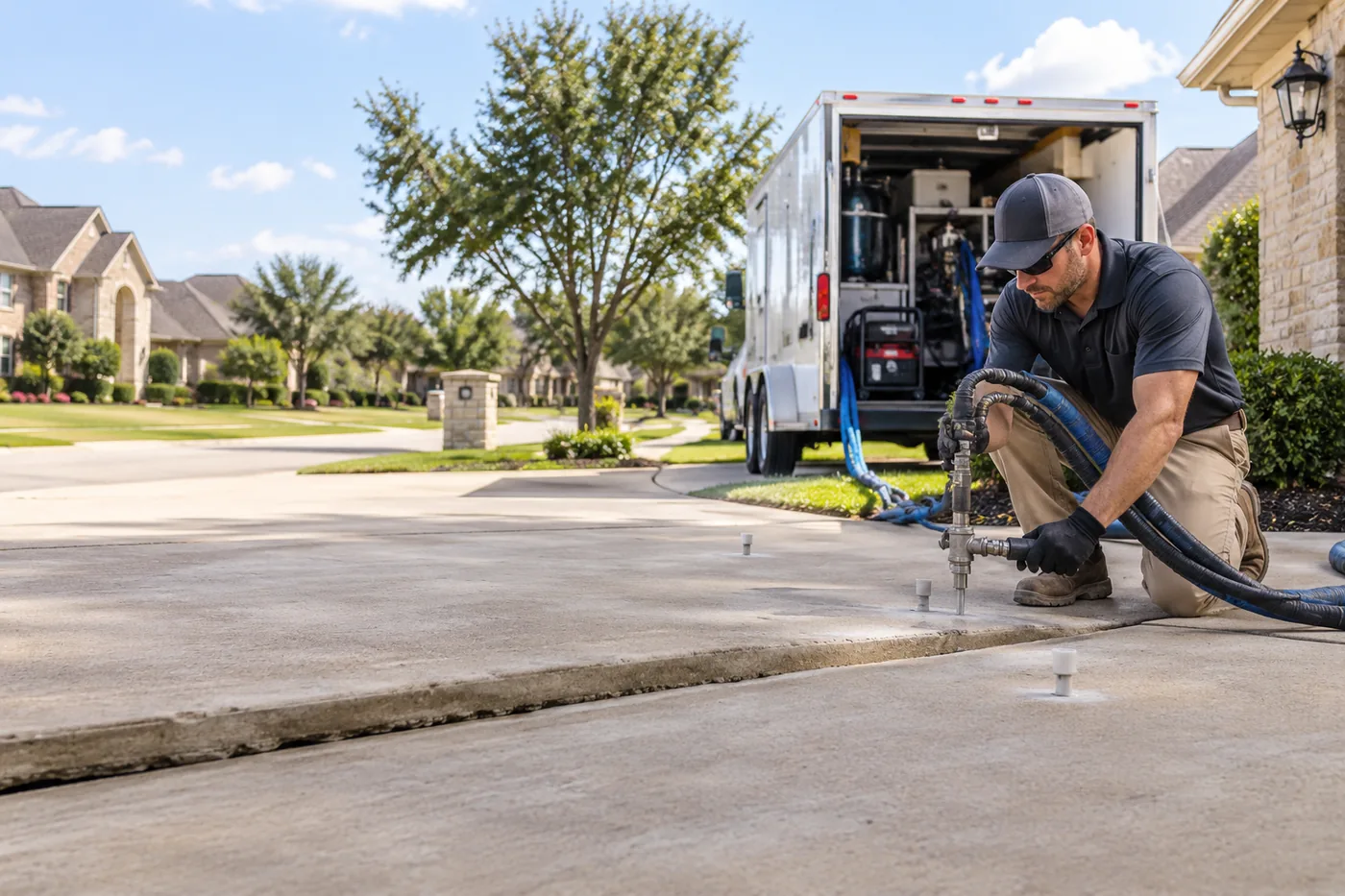
Polyurethane foam lifting is a common method because the material can flow into voids, expand below the slab, and be placed through relatively small injection points. Other slab-raising methods may also be considered depending on the project. The right choice depends on slab condition, access, void size, load, and contractor preference.
What to include in your quote request
Photos of the entire slab, close-ups of the highest and lowest joints, and pictures of nearby drains or downspouts make the first review easier. Include an approximate amount of settlement if you can measure it safely.
Get a Houston-area quote
Send photos and a short description of the settled concrete. The more clearly you show the slab, joints, nearby drainage, and surrounding surfaces, the easier it is to understand the problem before an on-site visit.