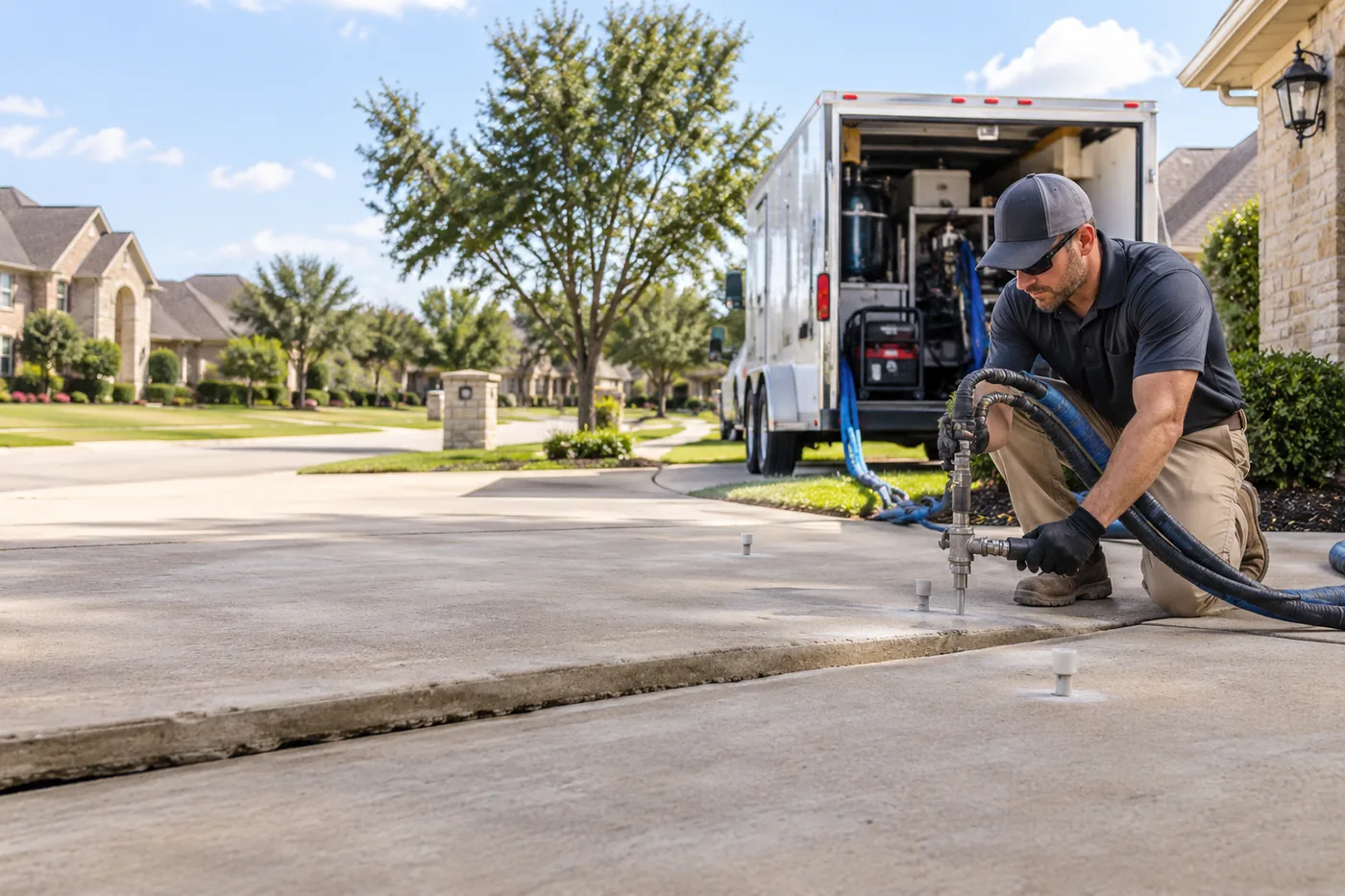
What happens during polyurethane lifting
Small holes are drilled through the slab at selected points. The lifting material is injected below the concrete, where it expands. The technician monitors slab movement and adds material in stages until the practical target elevation is reached.
Why people compare foam with mudjacking
Foam systems generally use smaller injection holes and lightweight material. Mudjacking uses a heavier cement-based slurry. Both aim to raise concrete, but material behavior, equipment, hole size, and project fit differ. See our full polyjacking versus mudjacking guide for a side-by-side explanation.
Where foam leveling is commonly used
Driveways, sidewalks, patios, pool decks, garage approaches, and selected commercial slabs are common candidates. The slab still needs to be in good enough condition to lift.
What foam lifting does not solve by itself
Leveling should not be treated as a substitute for correcting active drainage or water-management problems. If erosion, runoff, plumbing leaks, or downspouts are contributing to settlement, those conditions should be considered too.
Get a Houston-area quote
Send photos and a short description of the settled concrete. The more clearly you show the slab, joints, nearby drainage, and surrounding surfaces, the easier it is to understand the problem before an on-site visit.